
What comes after the Orbán Era?
Around 9pm on Sunday, 12 April a political system that had spent sixteen years perfecting its own permanence began, almost abruptly, to unravel. The moment itself was strangely unceremonious: a phone call, a concession, a shift in tone that spread faster than the official numbers. Within half an hour, it became clear that TISZA had crossed the threshold that mattered: not just victory, but a two-thirds constitutional majority in parliament. In Hungary’s institutional context, this is not simply an electoral outcome but a governing instrument. The same supermajority that Viktor Orbán had once used to entrench a centralised, legally reinforced political order was now in the hands of the man who had campaigned on dismantling it.
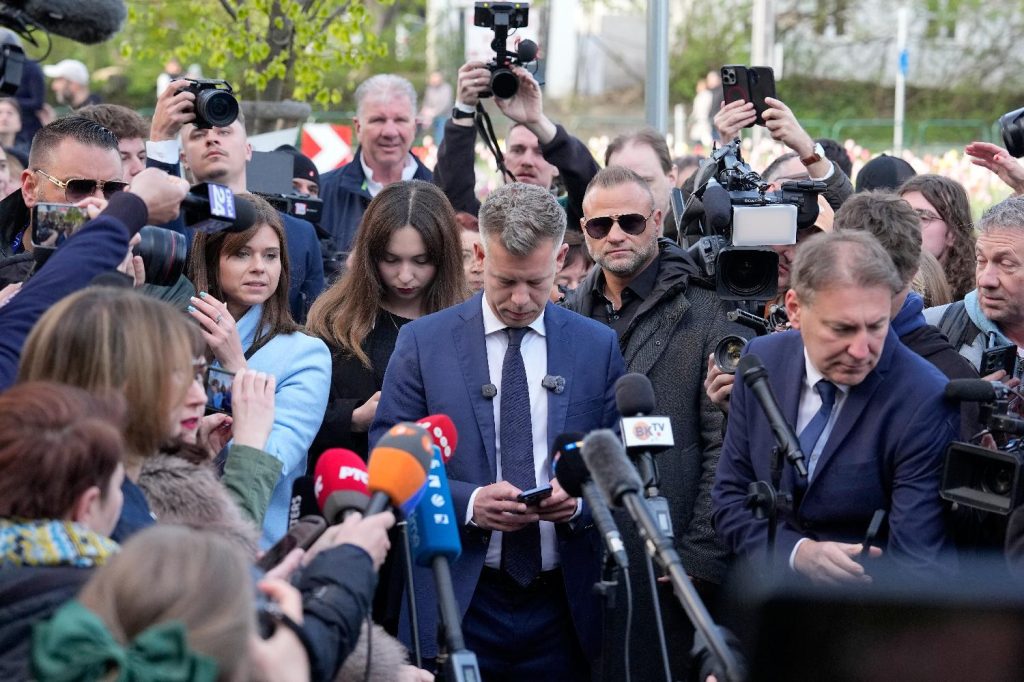
I was standing in the crowd when it happened, surrounded by a mix of celebration and disbelief that felt difficult to reconcile in real time. There was elation, certainly, but also something quieter: the awareness that systemic political ruptures rarely present themselves with such cleanliness. You have probably seen the videos, the flags, the dance of the next health minister, the chants, the sudden eruption of collective relief, but they do not quite capture the texture of that night. The way the city felt as people spilled out into the streets, moving not with urgency but with a kind of cautious exhilaration, as if testing whether this was real. There was a palpable sense of not only release but of recalibration. It was less a moment of triumph than a moment of suspension, between what had just ended and what had not yet begun.
Because even then, beneath the celebration, the harder questions were already present. Magyar’s campaign rhetoric and victory speech had been unusually direct: those who had benefited from systemic corruption would face consequences. It was a message calibrated to a public that had grown accustomed to impunity. In that sense, the election functioned as both a political and moral referendum on the distribution of power and resources over the past decade and a half. And it worked. But governing on that promise is infinitely more complicated than winning on it. Accountability, after all, is not a slogan, it is a process, one that unfolds within institutions that have themselves been shaped by the very system now under scrutiny.
Which raises the deeper, unavoidable questions: how does a country recover from sixteen years of illiberal rule? Not simply at the level of leadership, but at the level of institutional logic. How do you dismantle a political architecture that has not only captured institutions, but embedded itself in legal frameworks, economic networks, and everyday administrative practice? How do you unwind a system that has blurred the boundaries between state, party, and private interest, often through formally legal means? And perhaps most importantly, how do you do so without reproducing the very logic of power you are trying to escape? This is the paradox of post-Orbán Hungary: the tools available to transformation are, in many cases, the same tools that enabled entrenchment.
The Morning After
At his first international press conference on 13 April, Magyar made a series of moves that were as deliberate as they were symbolic. For the first time in years, independent Hungarian journalists were given priority to ask questions, a small change perhaps, but one that signaled a break with a media ecosystem widely characterised by central control, restricted access, and the systematic marginalisation of critical voices. In a country where public broadcasting had effectively functioned as an extension of executive messaging, even the choreography and format carried significance.
Symbolism, however, quickly gave way to substance. Magyar announced that one of the government’s first steps would be to halt what he described as ‘state-funded propaganda’, suspending news broadcasts on public television and radio until mechanisms for genuine independent oversight could be established. This proposal directly targets one of the core operational pillars of the previous system: the use of publicly financed media infrastructure to shape political narratives and consolidate incumbency advantages.
At the same time, he struck a careful note on the broader transformation ahead. His government, he said, would ‘do everything to restore the rule of law, plural democracy, and the system of checks and balances’, but crucially, it would not resort to anti-democratic methods in doing so. This distinction is not simply rhetorical but foundational. It reflects an awareness of the structural paradox facing the new administration. In effect, the new government is committing to dismantle an entrenched system while operating within its legal boundaries, a constraint that will likely shape every major decision that follows.
Institutional reform is already being prepared and placed on the agenda. Constitutional amendments are expected, including the introduction of a two-term limit for future prime ministers (a provision that, if applied retroactively, would effectively bar Orbán from returning to office). Such a move would not only recalibrate the formal rules of political competition but also symbolically address the concentration and personalisation of executive power that defined the previous era. At the same time, Magyar also publicly called on a range of senior officeholders, from the president to the heads of key judicial and regulatory bodies, as well as the chief prosecutor, to resign. So far, none have done so, illustrating the limits of political signalling when confronted with legally entrenched mandates and formally autonomous institutions.
This will be one of the most immediate challenges of the new government. Almost all of Hungary’s key institutions remain staffed by individuals appointed under the previous government, often with mandates deliberately extending beyond electoral cycles, or are governed by legal frameworks explicitly designed to resist rapid political turnover. While the constitutional majority provides the formal authority to rewrite these rules or replace personnel, exercising that authority is neither straightforward nor cost-free. It requires navigating legal constraints, political risks, and questions of legitimacy.
Pursuing accountability within these constraints is inherently difficult. Move too cautiously, and accountability risks becoming symbolic, a promise deferred. Move too aggressively, and it risks crossing into the territory of political retribution, undermining both domestic legitimacy and international credibility. The tension is further amplified by external scrutiny, particularly from the European Union, where the credibility of Hungary’s reforms will be judged not only by outcomes, but by the legality and proportionality of the methods used to achieve them.
What Change and Accountability Really Means
A two-thirds majority changes the mechanics of power in a way that is difficult to overstate. It gives Péter Magyar and the incoming TISZA government not only the capacity to govern, but the authority to rewrite, to amend the constitution, reshape cardinal laws, and, at least in theory, dismantle much of the legal and institutional architecture that sustained the Orbán system. In purely procedural terms, this is the strongest mandate any Hungarian government held in the past. Yet a mandate, however decisive, does not in itself constitute transformation; it merely defines the scope within which transformation can occur.
Magyar is not an outsider arriving untouched by the system he now seeks to dismantle. He is, in many ways, a defector from within it, someone who understands not only how power was centralised, but how it was stabilised, legitimised, and distributed across institutions, markets and networks of loyalty. This dual positioning, both insider and challenger, is likely to shape the pace and strategy of reform. At the same time, it underscores another point: Orbánism was never simply a collection of laws or personnel choices. It was a governing logic, one that fused political authority with economic control, legal engineering and institutional dependency into a self-reinforcing system.
Undoing that logic cannot be reduced to restoring ‘normal’ procedures, as if Hungary could simply revert to a pre-2010 equilibrium. That equilibrium no longer exists, not because it disappeared suddenly, but because it was gradually replaced by an alternative model of governance that blurred the boundaries between public authority and private interest, embedding political power into legally durable structures.
This is where the question of accountability becomes both central and complicated. During the campaign, Magyar was explicit: those who benefited from the systemic corruption would face consequences. That promise resonated with the citizens because it spoke to a widely shared perception that public resources had been systematically redirected into private, politically connected networks. However, converting political demand into legally sustainable action introduces a second layer of complexity. It requires not just intent, but functioning legal instruments and institutions capable of acting within, not outside, the rule of law framework the new government seeks to restore.
One of the most consequential proposals so far is the creation of a Nemzeti Nemzeti Vagyonvisszaszerzési és Védelmi Hivatal – a national asset recovery office designed to identify, investigate and potentially reclaim wealth accumulated through state capture mechanisms, including mismanaged and inflated public procurement processes over the past decade and half.
The scale of the challenge is considerable. Over the years, vast amounts of public wealth were moved into semi-private structures, most notably the közérdekű vagyonkezelő alapítványok (or KEKVAs in short) public interest asset management foundations. These include formerly state owned companies, cultural institutions, museums, valuable real estate, castles and villas, national parks, and even the majority of public universities. These entities were then endowed with state assets, shares, property and strategic assets, then placed under governance frameworks deliberately designed to be insulated from electoral change. As a result, they function less as neutral asset holders and more as long-term extensions of a particular political-economic order.
Reversing or scrutinising these arrangements will be legally complex. Many are protected by cardinal laws or contractual frameworks designed precisely to withstand changes in government. Attempting to reclaim these assets will also raise questions about property rights, legal continuity and the limits of retroactive justice. It is precisely here that accountability meets its structural limits: the legacy of the previous system is not only political, but juridical: embedded in law in ways that cannot be undone without consequence.
Brussels as Gatekeeper: Conditionality, Credibility and Constraint
The incoming government has also made it clear that restoring relations with Brussels and Member States, as well as unlocking frozen EU funds is not merely a diplomatic objective but a structural necessity. These funds (approximately 17 billion euros), suspended under three separate legal instruments tied to rule of law benchmarks are not just symbolic, they are economically consequential. They represent both fiscal breathing space and signal to markets, investors and domestic constituencies that Hungary is once again aligned with European governance standards. And the timing is particularly unforgiving: parts of the Recovery and Resilience Facility come with hard deadlines in August 2026, meaning that delays in reform are not simply postponements, but can translate into irreversible financial losses and foregone investment opportunities.
The European Commission has made it very clear that it is willing to engage, even unusually quickly, sending senior officials to Budapest within days of the election, suggesting a degree of political openness to reset relations, but engagement does not equal disbursement. What matters is whether reforms are not only adopted but credibly implemented, operationalised in practice, and insulated from future political reversal.
The same reforms required to unlock EU funds, independent courts, depoliticised prosecutors, transparent spending, are also the conditions necessary to investigate how those funds were used under the previous system. But that overlap is also where tension emerges. If accountability efforts appear politically directed, they risk undermining the very institutional independence Brussels is demanding. If, on the other hand, institutions move too cautiously, they may fail to satisfy both domestic expectations and EU conditionality. This creates a feedback loop in which domestic reform and external validation are mutually dependent, yet not perfectly aligned in timing or incentives.
One of Magyar’s commitments is for Hungary to join the European Public Prosecutor’s Office (EPPO), a move that would allow independent EU-level investigators to examine the use of EU funds in Hungary, including potential abuses under the previous government. This represents a significant departure from the previous administration’s position and signals a willingness to embed accountability within supranational oversight mechanisms.
By allowing EU-level prosecutors to investigate fraud involving EU funds, the new government would effectively introduce an external arbiter into the accountability process, one that can lend credibility while reducing accusations of domestic political interference. At the same time, this is not without risk. It shifts part of the sovereignty over politically sensitive investigations beyond national control, a move that would have been politically unthinkable under the previous government, and one that may itself become contested domestically.
Ultimately, the EU funds question crystallizes the broader paradox of the post-Orbán transition: Hungary needs to move quickly to secure funding, but must do so through reforms that are, by definition, slow, legalistic, and verifiable. It must demonstrate institutional independence while actively restructuring those same institutions. And it must pursue accountability in a way that strengthens, rather than weakens, the credibility of the system it is trying to rebuild. In this sense, Brussels will not merely be a financial partner, but a co-author of the transition, setting the pattern and parameters within which meaningful change can occur.
Governing After Victory
If election night was about rupture, and the weeks that followed about direction, the swearing-in on Saturday, 9 May will be about something far more concrete: who actually governs. Because beyond rhetoric, promises, and institutional dilemmas, political change ultimately materialises through people, through the composition of the cabinet, the distribution of portfolios, and the internal logic of how authority is organised.
Péter Magyar’s government will consist of 16 ministries, a deliberate departure from the more centralised ‘super-ministry’ model associated with the Orbán era. This is not an administrative detail; it reflects a governing philosophy. By fragmenting portfolios into more specialised units, the new administration signals an intention to decentralise executive control and reintroduce clearer lines of policy responsibility.
The composition of the cabinet reinforces this. At its core is a mix of party loyalists, technocrats, and a limited number of external experts, a hybrid structure that mirrors the broader political coalition Magyar assembled during the campaign.
Key economic portfolios are entrusted to policy specialists: András Kármán at finance, István Kapitány at economy and energy. Foreign policy is led by Anita Orbán, while defence is assigned to Romulusz Ruszin-Szendi, a former military chief, a choice that signals both continuity in security expertise and a recalibration of Hungary’s international positioning.
Equally notable are appointments in areas that had been politically sensitive under the previous government. Education, for example, is assigned to Judit Lannert, an independent expert, while transport and infrastructure go to Dávid Vitézy, a figure with technocratic credentials and urban policy experience. This suggests an attempt to depoliticise certain sectors by placing them under professional rather than purely partisan leadership.
At the same time, several ministries reflect the broader ideological and structural priorities of the new administration. New or redefined portfolios, such as ‘Living Environment (headed by a former zookeeper)’, ‘Social Relations and Culture,’ and ‘Science and Technology’ indicate a shift toward policy areas that had been either centralised or politically instrumentalised in the past.
Yet the most important feature of this cabinet is not individual names, but its underlying logic. This is not a government built around a single dominant political centre, as was the case under Orbán. Instead, it appears designed as a distributed system of governance, where authority is spread across multiple actors, each with a defined domain. In theory, this reduces the risk of over-centralisation. In practice, it introduces a different kind of challenge: coordination.
Many of these ministers will formally take office over the weekend and next week, but they will not assume control over fully aligned institutions. As outlined earlier, much of the administrative apparatus. from senior civil servants to regulatory bodies, remains shaped by the previous system. This means that ministers will govern in an environment where formal authority and practical control may not immediately coincide. In other words, the cabinet inherits power, but not necessarily the full capacity to exercise it.
This is particularly significant in portfolios such as justice, interior, and public administration, areas where legal frameworks and personnel continuity directly affect the ability to implement reform. The appointments of figures like Gábor Pósfai (interior) and Márta Görög (justice) are therefore not just policy choices, but strategic ones – Pósfai was head of TISZA’s operations during the campaign, and Görög is the ‘uncrowned queen of the Hungarian legal profession’ according to Magyar. They will be central to navigating the boundary between reform and legality, between political mandate and institutional constraint.
Ultimately, the composition of the new government tells us something important about the nature of the transition itself. It is not revolutionary in form. It does not attempt to sweep away the state and rebuild it from scratch. Instead, it is reformist in structure but ambitious in intent, combining technocratic governance with a political mandate for systemic change. Whether that combination holds will depend less on the names announced this week, and more on how these actors operate once in office. Because the real challenge is not assembling a government. It is making it function within a system that was never designed to be easily changed.
Regional Repercussions: Serbia, the Western Balkans, and the End of a Political Axis
Beyond Hungary, the implications of this transition extend well past its borders, reshaping political expectations across Central and South-Eastern Europe. In Serbia, where governance patterns have often mirrored elements of the Hungarian model, centralised power, media control, and the systematic blending of state and party structures, Magyar’s victory introduces a new and potentially destabilising variable. It disrupts what had become an implicit assumption in the region: that hybrid regimes, once sufficiently entrenched, are electorally resilient if not outright durable.
For over a decade, Viktor Orbán functioned not only as Hungary’s prime minister, but as a strategic anchor for illiberal governance within the European Union. His government provided political cover, ideological validation, and, at times, material support to like-minded actors in the Western Balkans. As analysts have noted, his defeat removes ‘the main ally inside the EU’ for several Balkan leaders who relied on Budapest as both a shield and a bridge to Brussels. This alters the external environment in which leaders like Aleksandar Vučić operate, narrowing their room for manoeuvre at the European level while increasing scrutiny.
In Serbia specifically, the parallels are difficult to ignore. The consolidation of media ownership, the use of state resources to reinforce incumbency, and the blurring of institutional boundaries between party and government have all followed trajectories comparable to Hungary’s earlier path. Magyar’s victory, therefore, does more than signal change in Budapest; it introduces a comparative benchmark, an example that entrenched systems can, under certain conditions, be electorally overturned.
At the same time, this shift cuts in two directions.
On one hand, it raises expectations among opposition actors across the region, who may now see electoral breakthrough as a plausible, rather than hypothetical, outcome. On the other, it increases pressure on incumbent governments, which may respond not with liberalisation, but with further consolidation, tightening control over institutions precisely to avoid a similar fate. The regional effect, therefore, is not linear democratisation, but heightened political volatility.
This dynamic is further complicated by the dense network of political, economic, and institutional ties that developed between Hungary and parts of the Western Balkans during the Orbán years.
A particularly illustrative example is the system of cross-border funding and influence linked to Hungarian-backed foundations and state channels. Reporting has shown that Hungarian public funds, often distributed through intermediaries such as the Bethlen Gábor Fund, have supported organisations connected to ethnic Hungarian political actors in neighbouring countries, including Serbia. These mechanisms blurred the line between diaspora support, political alignment, and external influence.
In Serbia, this is visible in the case of the István Pásztor Foundation, linked to the Alliance of Vojvodina Hungarians (VMSZ), a long-time political partner of both Orbán and the Serbian government. The foundation has received substantial financial support through Hungarian state-backed channels, with funds allocated for economic development, community projects, and institutional strengthening. Following István Pásztor’s death, leadership passed to his son, Bálint Pásztor, raising questions about continuity, political inheritance, and the concentration of influence within a relatively closed network of actors.
The Pásztor Foundation operates as a key vehicle for distributing Hungarian government funds to the Hungarian minority in Vojvodina, primarily through programs managed by the Bethlen Gábor Fund. These resources have supported local businesses, agricultural development, and community institutions, but their allocation has also reinforced the political position of VMSZ within Serbia’s domestic landscape. The leadership transition from István to Bálint Pásztor highlights how these financial and institutional structures are not only cross-border, but also deeply personalised and politically embedded.
In the context of Hungary’s transition, the future of such networks becomes uncertain. A government committed to transparency, rule-of-law standards, and EU alignment may seek to reassess these funding mechanisms, particularly where they intersect with political influence. This could have ripple effects in Serbia, where segments of the political and economic ecosystem have been partially integrated into Hungary’s external strategy.
Ultimately, the regional impact of Orbán’s defeat is less about immediate transformation and more about a shift in the perceived limits of political possibility. It weakens a previously coherent axis of illiberal cooperation, introduces uncertainty into established networks of influence, and forces both opposition and incumbents to recalibrate their strategies.
Whether this leads to democratic opening or further entrenchment will depend on local conditions.
But what has already changed is the narrative: the idea that such systems cannot be electorally undone has been decisively challenged.