
From the Streets to the Ballot Box: What Hungary Can Teach Serbia
As Serbia gears up for what many already describe as a historic election (even though we still don’t know the date yet), the challenge is not simply whether an entrenched government can be defeated, but whether almost two years of a student-led mobilisation can be translated into electoral power.
Author: Tjaša Feher
The political crisis that followed the November 2024 Novi Sad railway station canopy collapse has produced something Serbia has not seen for years: sustained civic mobilisation, new networks of trust and participation by large numbers of people outside conventional opposition structures.
But moving from the streets to the ballot box changes the nature of the challenge. Elections require organisation, reach, data, local infrastructure, election-day capacity and the ability to persuade people who have never attended a protest. Serbia’s ruling party will enter such a contest with a formidable organisational and media advantage, while concerns about institutional pressure, electoral integrity and the use of state resources remain central to the political environment.
In this context, it is worth looking north, to Hungary.
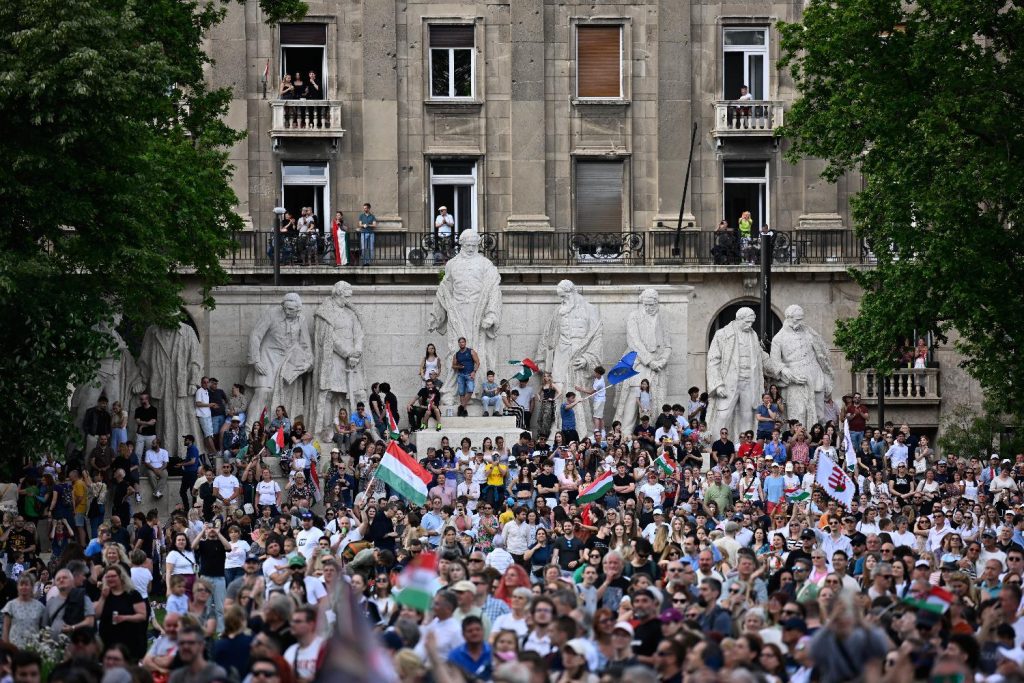
In April 2026, Péter Magyar’s Tisza Party managed to defeat Viktor Orbán’s Fidesz after sixteen years in power. Hungary and Serbia are, of course, different historically, institutionally and politically, and the Hungarian experience should not be treated as a blueprint. But there are parallels: state capture and an entrenched governing party, an unequal media environment, extensive advantages of incumbency including the use of state resources for political campaigns, a fragmented and weakened traditional opposition and a new political force trying to turn widespread dissatisfaction into an electoral majority.
What is particularly interesting about Hungary is therefore not simply that Orbán lost. It is how a relatively new political movement managed to build the organisation required to compete with a political machine that had spent years making itself extraordinarily difficult to defeat.
The Hungarian experience is ultimately a story about the transition from anger to participation, from participation to organisation, and from organisation to electoral power.
Making change believable
Perhaps Tisza’s first achievement was psychological. Hungarian opposition parties had spent years campaigning against Orbán, exposing corruption and coordinating candidates, but many citizens had stopped believing they could actually win. Tisza gradually changed that perception.
It became the obvious political destination for people who wanted change. As its polling improved and its local organisation expanded, more volunteers joined, more people donated, more voters paid attention and the movement became more visible. That growth, in turn, made Tisza look increasingly capable of governing. Many post-election analyses identify this interaction between leadership, organisation, message and mobilisation as one of the central explanations for the breakthrough.
Tisza did not simply convince people that Orbán should leave. It convinced enough of them that he could be defeated. That distinction matters in political systems where one party has governed for so long that its continued rule begins to feel inevitable.
For Serbia, where a generation has grown up knowing only governments dominated by Aleksandar Vučić and SNS, that psychological shift may be just as important as any individual campaign technique.
Reaching and preaching to the other side
The Tisza campaign also understood that defeating Fidesz required more than mobilising people who already disliked Orbán. Tisza needed former Fidesz voters, non-voters and people who had become alienated from both the government and the traditional opposition.
The campaign therefore avoided defining itself primarily through the old left-right divide. Magyar used national symbols and spoke about Hungary, dignity, sovereignty, public services and national renewal. He travelled extensively through conservative areas and smaller communities rather than focusing primarily on Budapest and other opposition strongholds.
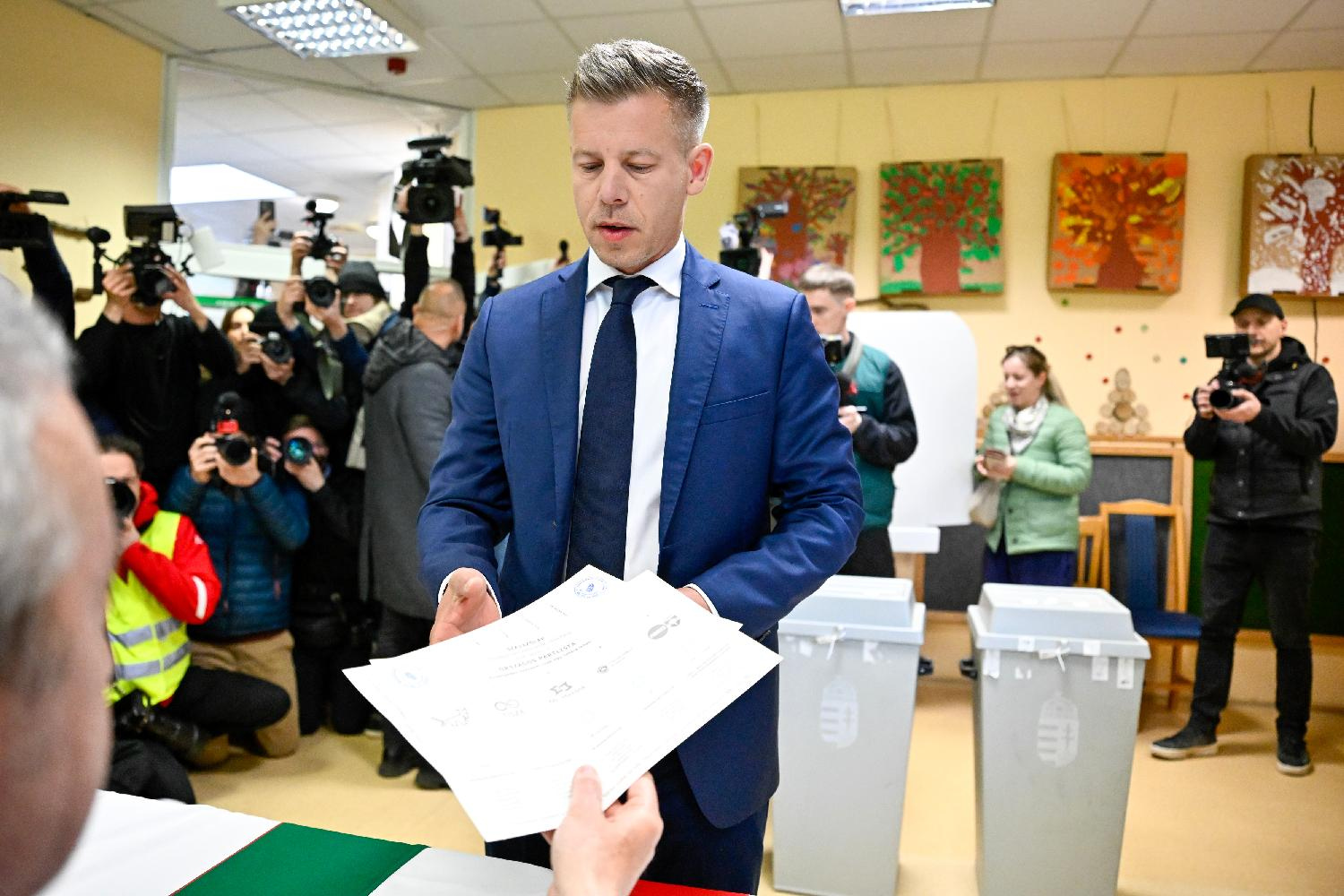
His own background helped. As someone who came from the Fidesz ecosystem, Magyar could offer dissatisfied government voters a political exit without asking them to renounce everything they had previously believed. The message was effectively that they did not need to become traditional opposition voters in order to conclude that the system had gone too far.
For Serbia, this is an important lesson. An electoral coalition capable of defeating a dominant governing party cannot consist only of students and existing opposition voters. It also has to reach politically disengaged citizens, people who distrust the traditional opposition and disappointed government voters. The Hungarian experience suggests that defeating an entrenched government requires breaking into its electorate rather than simply maximising turnout among its existing opponents.
Turning a movement into an organisation
The second major breakthrough was organisational. Tisza did not remain a movement centred on Magyar, large rallies and social-media attention. It built infrastructure around the enthusiasm that had emerged.
At the centre were the Tisza Szigetek, or Tisza Islands: locally organised groups spread across Hungary. By the campaign, the network included thousands of local communities and tens of thousands of participants, many of whom had never previously been active in party politics.
When campaign manager Péter Tóth took over in early 2025, he described enormous civic energy already existing inside these groups. His task was not to manufacture enthusiasm but to organise it: identifying capable local organisers, reducing duplication, filling geographic gaps and directing thousands of volunteers toward common objectives.
Tóth estimated that an effective nationwide election operation required roughly three strong activists for every polling district, or around 30,000 people nationally. That calculation illustrates how concrete the organising became. The objective was no longer simply to attract supporters. It was to develop enough local capacity to cover the country.
This is particularly relevant to Serbia because the student movement already possesses something political campaigns normally struggle to create: motivated people, local networks and a degree of social trust. The challenge is to convert support into responsibility. A person who sympathises with a movement is politically useful; a person who knows that they are responsible for organising a particular neighbourhood, village, polling station or group of volunteers is organisationally powerful.
Local organisation mattered
Tisza’s approach deliberately lowered the barrier to local organising. Rather than beginning with formal party branches, small groups of citizens could organise locally and gradually become part of the broader network.
This allowed political organisation to grow in places where the opposition had traditionally been weak. A handful of active people could organise a meeting or street stall, recruit others, support a visit by Magyar and gradually establish a permanent local presence.
Importantly, Tisza did not treat rural Hungary as territory that simply belonged to Fidesz. The campaign invested heavily in villages and small towns and tried to build local capacity rather than continually importing activists from Budapest or other opposition strongholds.
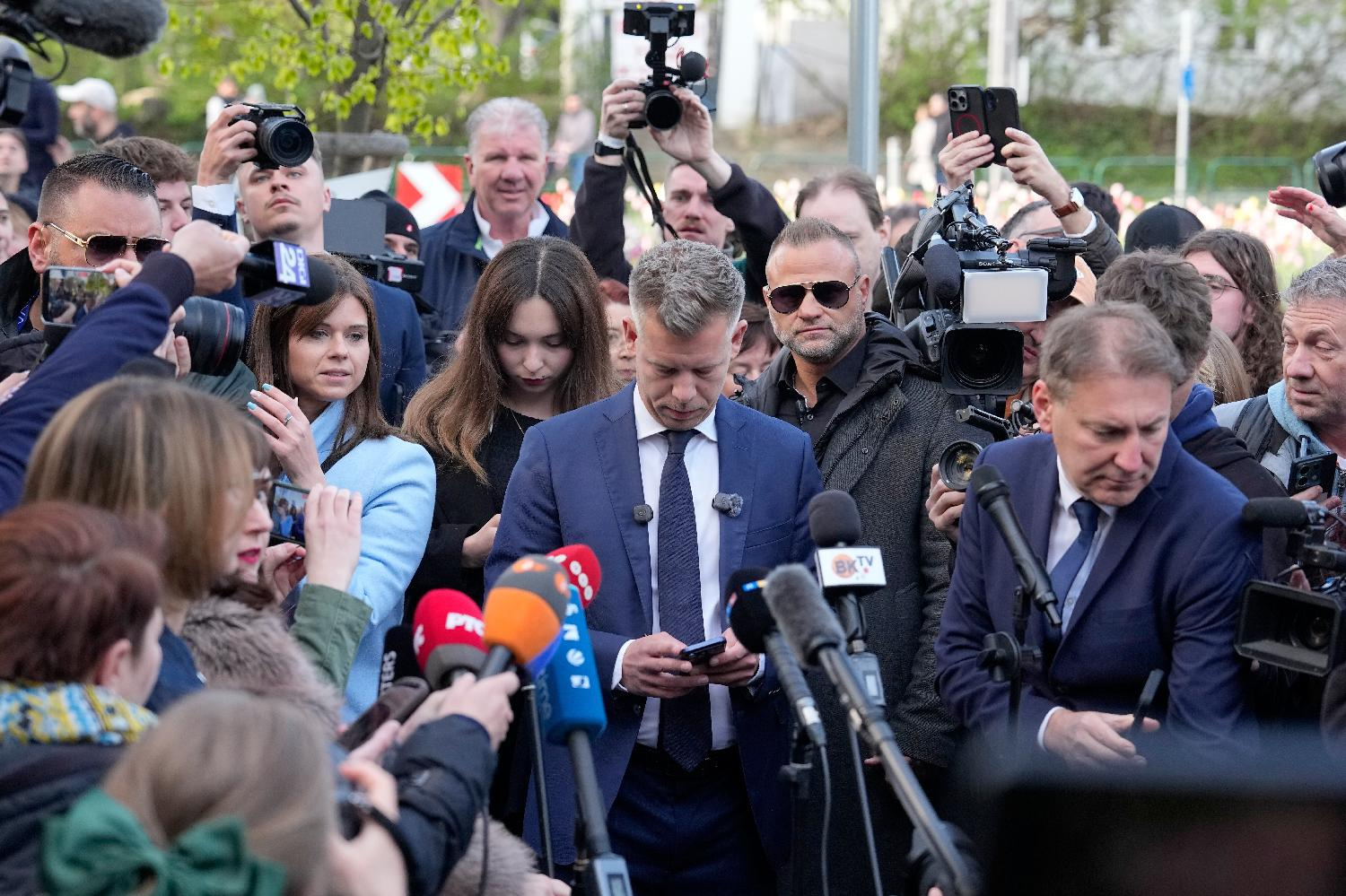
That approach was reinforced by Magyar’s extensive országjárás, or country tours. These were not simply rallies. Local groups prepared visits, mobilised participants and recruited supporters around them. A national event therefore strengthened the local organisation rather than disappearing once Magyar left.
Tóth later said that through Magyar’s tours, events, newspapers and other field activity, Tisza reached every Hungarian settlement repeatedly during 2025. He attributed a significant part of the party’s improved rural performance to this persistent presence.
The underlying principle was simple: a campaign visit should leave organisation behind.
Face-to-face contact as an alternative media system
This field strategy also helped Tisza respond to Fidesz’s enormous media advantage. Rather than assuming that it could match the government’s television presence, advertising resources and broader communications infrastructure, Tisza invested heavily in direct contact.
A volunteer speaking to a neighbour, a street stall in a small town, a local meeting or a trusted person explaining why they had changed their political mind all became communications channels. Digital media amplified these interactions, but did not replace them.
This is an important lesson from Hungary. When access to mass media is deeply unequal, the answer is not necessarily to try to reproduce the incumbent’s media machine on a smaller budget. A challenger can build a parallel communications infrastructure based on people and trusted relationships.
Giving volunteers meaningful roles
The campaign also treated volunteers as an organisational resource rather than simply an audience.
People were given concrete tasks: running street stalls, distributing material, canvassing, organising meetings, collecting contacts, recruiting other volunteers, helping with Magyar’s visits, supporting constituency candidates and eventually protecting polling stations.
This mattered because participation created its own leadership pipeline. Local networks revealed who consistently showed up, who could organise others, who was trusted locally and who could take responsibility without constant supervision. Some of those people could then take on larger roles.
That offers an interesting lesson for movements suspicious of traditional party hierarchies. Leadership does not necessarily have to be determined entirely from the top. Organisation itself can reveal leaders by showing who is capable of doing the work. For a student movement wary of reproducing traditional party hierarchies, this may be particularly interesting.
Data and professionalisation
As Tisza grew, enthusiasm alone was no longer sufficient. Tóth was explicit after the election that modern campaigning ultimately requires both people and data.
A large demonstration tells a movement that many people support it. An electoral organisation needs to know who those people are, where they live, whether they are willing to volunteer and whether somebody should contact them again. According to Tóth, constituency candidates were encouraged to build databases containing roughly 15,000 contacts.
Tisza consequently developed professional teams dealing with data, events, operations and communications around its grassroots network. This was an important transition. The movement professionalised, but the professionals were there to increase the effectiveness of the civic network rather than replace it.
The distinction is potentially important for Serbia. A student-led movement may need professional campaign skills, legal expertise, data systems and logistics without necessarily adopting the organisational culture of the traditional parties it has sought to remain independent from.
Technology supported organisation rather than replacing it
Tisza eventually developed its own digital organising platform, TISZA Világ, connecting supporters with local groups, activities and volunteer opportunities. It also used tasks, points and badges to encourage participation.
But the chronology is important. Tisza did not build an app and then try to create a movement around it. Local communities and volunteer networks came first. Digital infrastructure was introduced once participation had become too large to coordinate informally.
The relevant lesson is therefore less about which app to use and more about what technology should accomplish. The objective is to make it easy for someone who expresses interest to take the next step: join a local community, attend something, volunteer and eventually assume responsibility. Technology works when it reduces the distance between online sympathy and offline participation.
Communicating differently
Tisza’s communication strategy also benefited from the energy of its supporters. Magyar frequently generated very high engagement while producing less content than the Fidesz communications machine. Supporters themselves became distributors, allowing the campaign to achieve reach that could not be purchased through traditional media alone.
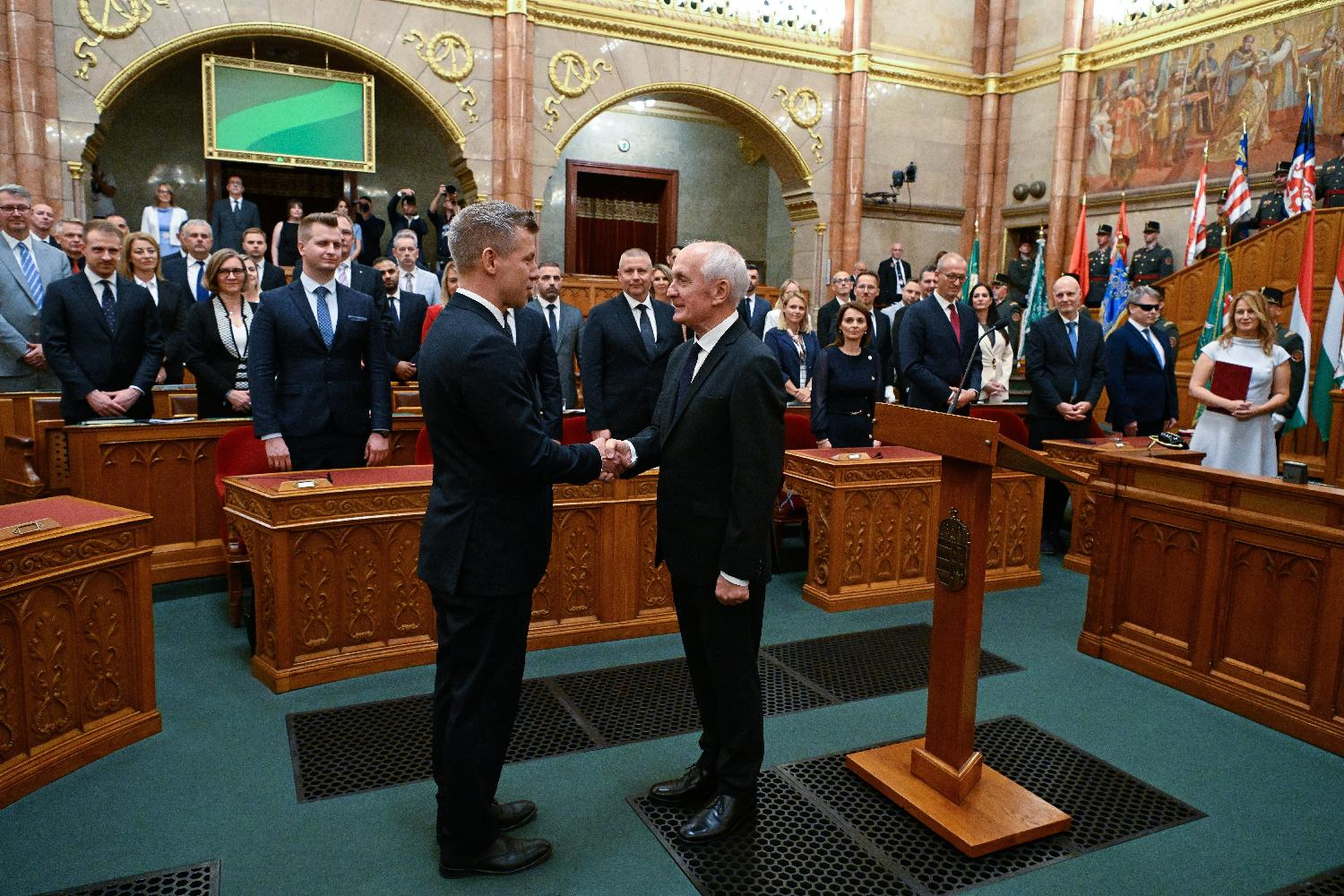
At the same time, Tisza tried not to reproduce every aspect of the political culture it was attacking. Tóth said after the election that the campaign had received compromising material involving political opponents and their families but deliberately refused to use it. His argument was that political change should also mean a different political morality.
This became symbolically visible after the election when a Budapest advertising wall known for years of fear-based government campaigns was replaced by flowers and the phrase “It can also be beautiful.” The image captured a wider exhaustion with permanent political mobilisation through fear, enemies and hatred.
For civic movements, this matters because credibility is a scarce political resource. A movement that presents itself as a break with existing political practices can quickly undermine that advantage if it begins behaving exactly like the actors it criticises.
Connecting corruption to everyday life
Tisza also succeeded in translating complicated questions about democratic decline into experiences people could recognise.
Hungary’s institutional transformation involved constitutional changes, electoral rules, weakened checks and balances, media capture and the growing overlap between party and state. But those concepts can remain abstract for many voters.
The campaign connected them to hospitals, schools, infrastructure, economic insecurity and the enrichment of politically connected elites. Corruption was therefore not simply presented as politicians stealing money. The message was that the way the system operated explained why ordinary things no longer worked properly.
There is an obvious potential parallel with Serbia. The Novi Sad tragedy has already created a powerful connection between corruption, institutional accountability and the real-world consequences of state failure. The challenge is to extend that connection to people’s wider everyday experiences without reducing the campaign to an endless catalogue of scandals.
Not surrendering patriotism
Tisza also refused to allow Fidesz to monopolise national identity. Magyar spoke in the language of Hungary, sovereignty, dignity and national renewal, presenting competent institutions and functioning public services as part of what the country deserved.
This helped make political change acceptable to voters who identified as conservative or patriotic. They did not have to choose between their national identity and dissatisfaction with the government.
That lesson travels beyond Hungary. An entrenched government should not automatically be allowed to own concepts such as patriotism, stability, security and national dignity. Accountability, competent government and institutions that work can equally be framed as expressions of commitment to one’s country.
Preparing for election day
Finally, Tisza treated election-day protection and turnout as organisational tasks that had to be prepared well in advance. According to Tóth, the campaign spent around eight months preparing its election-day operation, including volunteer deployment, polling-station coverage and responses to potential irregularities.
This represents the final stage of Tisza’s transformation. What began as anger, public mobilisation and a charismatic political breakthrough eventually acquired the less visible machinery required to win an election: local organisers, voter contacts, field teams, data systems, communications capacity, legal preparation, polling-station presence and turnout operations.
That machinery is not particularly glamorous, but in a difficult electoral environment it may be as important as the campaign itself.
What might this mean for Serbia?
Hungary is not a campaign manual for Serbia. Magyar was a former insider with a particular ability to reach disappointed Fidesz voters. Hungary has a different electoral system, different political traditions and a different relationship between parties and civil society. Serbia’s student movement is also highly decentralised, and much of its legitimacy comes precisely from being outside conventional party politics.
But that creates the central challenge. How can the movement preserve the qualities that created trust while developing the capacities necessary to contest an election?
The Hungarian experience suggests that the transition does not necessarily have to be directly from protest to political party. There is an intermediate stage in which protest networks become durable local communities, volunteers take responsibility, organisers emerge, voter relationships are built and professional electoral capacity develops around the civic movement.
For Serbia, this could mean building beyond the places where the movement is already strongest; maintaining sustained presence in smaller towns and villages; giving volunteers concrete responsibilities; reaching people who have never attended a protest; speaking seriously to disappointed SNS voters rather than treating them as a hostile bloc; connecting corruption to everyday life; developing secure voter-contact systems; and preparing observers, lawyers and turnout operations long before election day.
None of these elements alone explains what happened in Hungary. Tisza’s strength came from the way they reinforced one another. Magyar’s national profile brought people into local communities. Local communities created volunteers. Volunteers generated voter contact. Better organisation strengthened the perception that Tisza could win, which attracted still more participation. Digital communication amplified field organising rather than substituting for it. And an inclusive political message allowed the movement to expand beyond the traditional opposition electorate.
That coherence may be the most important lesson.
Hungarians had protested before. They had exposed corruption before. They had voted against Orbán before. What Tisza eventually added was the infrastructure capable of translating dissatisfaction into electoral power.
For Serbia, where the student movement has already demonstrated an extraordinary capacity to mobilise, the next question may therefore be less about whether the desire for change exists and more about how that energy is organised without losing what made it powerful in the first place.
The Hungarian case does not provide the answer. But it offers a useful reminder: hope can bring people into the streets; organisation is what gives that hope electoral power.