
How Autocrats Select Their Presidential Candidates – An Ally Who Must Not Outshine Them
“We all gonna vote, right? Well, then, just make sure that later, while (Vučić) is prime minister, we amend the Constitution, and then he can return to being president. There, we have a solution to everything,” said the current Speaker of the National Assembly and former Prime Minister Ana Brnabić while visiting the Serbian Progressive Party’s stands in Resnik at the end of August 2026.
Moving from the office of president to that of prime minister and/or vice versa, while appointing a loyal successor in the vacated position, is not a new phenomenon. Sometimes it is a one-off solution to “get through” a term in office. If it successfully serves its purpose – retaining power, it can also be repeated through rotations in key political positions. Colloquially known as tandemocracy, the phenomenon is most commonly associated with the tandem of Vladimir Putin and Dmitry Medvedev at the helm of the Russian Federation. In the Western Balkans, illustrative examples include Milo Đukanović and Filip Vujanović in Montenegro, and Milorad Dodik and Željka Cvijanović within the Republika Srpska entity and at the level of the Federation of Bosnia and Herzegovina.
Some candidates turn out to be charismatic and win the genuine sympathy of the electorate; others play the role of antagonists and are given the unenviable task of implementing unpopular reforms; while some remain just as anonymous as they were before taking office. What they have in common is that, regardless of their role and formal remit, it is clearly understood who makes the decisions, because all power is concentrated in the hands of a single actor. This is why it is worth remembering that the “-dem” in tandemocracy comes from tandem, not from democracy – because the phenomenon typically manifests itself in societies where democracy is precisely what is lacking. It is either a facade of democracy or a symptom that a predominantly democratic society is sliding towards a system with authoritarian tendencies.
How did those leaving office, but not power, select their presidential candidates?
The “Ballpoint Pen” and Other Types of Presidents
Georgia
Year 2013 – Giorgi Margvelashvili, the presidential candidate of the Georgian Dream party, won the election in the first round with 62% of the vote. Representatives of the OSCE and NATO, as well as EU officials, congratulated the people of Georgia on their strong democratic capacities and expressed support for the country’s Euro-Atlantic aspirations.
Year 2024 and beyond – the European integration process was suspended for four years due to an alleged hybrid war waged by the West against Georgia; a law on foreign agents modelled on Russian legislation was adopted; and police brutality, repression and violence have become normalised.
The common factor linking these two Georgias is Bidzina Ivanishvili, described by the media as the most powerful and richest man in Georgia. The founder and honorary chairman of Georgian Dream was prime minister in 2013, when he put forward Margvelashvili as the party’s presidential candidate. At the time, Margvelashvili was education minister in his government, having previously served two terms as rector of the Georgian Institute of Public Affairs. He was described as “a little-known academic with limited government experience, having served as a minister only since Ivanishvili’s movement won the previous year’s election.”
Under the Constitution adopted shortly before his election, the powers of the president had been reduced to largely ceremonial functions, while retaining control over the armed forces and an important role in foreign policy, broadly similar to Serbia. Margvelashvili himself pointed out that Ivanishvili’s role in his election as president could not be ignored. Two interesting details about the president are a viral photograph of him knitting socks and an anecdote that, when he was elected president, it took his public relations team an hour to find even a single photograph of him in which he was not with Ivanishvili.
After his term expired in 2018, he did not run for president again. Reflecting on his presidency in a 2024 statement, he said:
“He (Ivanishvili) claimed that he had sold his assets in Russia and that he was free from Russian influence. There was always talk of Euro-Atlantic integration. At some point, I stopped believing it and saw that we were heading in a different direction. But voters believed they were still moving towards Europe.”
In the meantime, Ivanishvili officially withdrew from politics, but informally remained the dominant figure who “pulled all the strings.” In the next presidential election, in 2018, he once again had his “favourite” – he backed the formally independent candidate Salome Zourabichvili, who became the first woman to serve as president of Georgia. She had previously held various diplomatic posts in France, the United States, Italy, Austria, Chad and Belgium, served as France’s ambassador to Georgia, as Georgia’s foreign minister, and subsequently as a member of parliament. She was also the last directly elected president of Georgia, since constitutional amendments adopted in 2018 provided that the president would henceforth be elected by an Electoral College. And it was precisely this Electoral College that, in October 2024, declared former professional footballer Mikheil Kavelashvili her successor, with the support of Ivanishvili’s Georgian Dream. In the meantime, Zourabichvili had become a prominent figure in anti-government protests and the opposition.
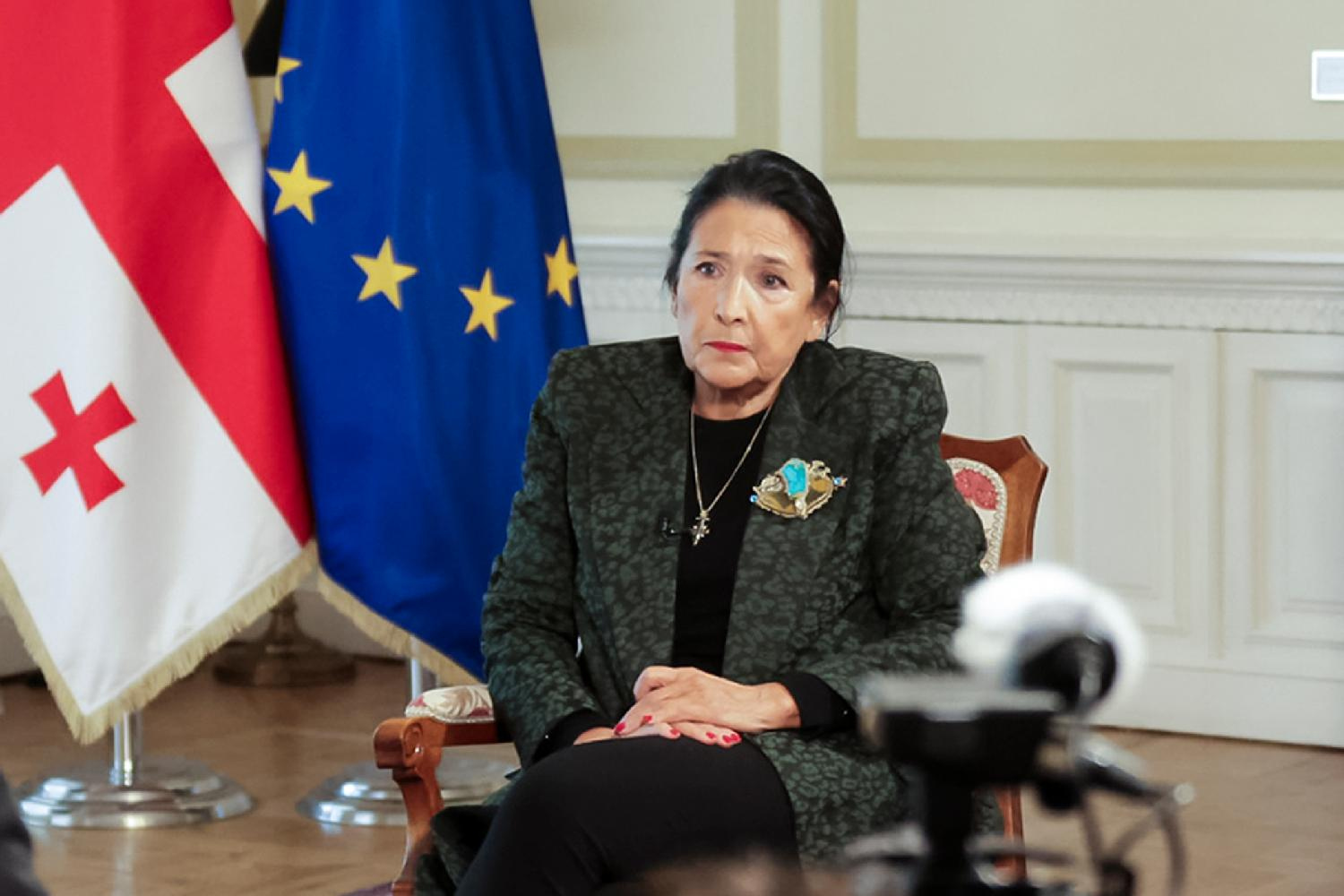
Georgia’s presidents were elected at a time of a drastic reduction in the executive powers of the presidency and a sharp division over foreign policy along the West (EU and NATO) versus Russia axis. While the first candidate was the moderate and unquestionably loyal Margvelashvili, with limited political capital and an established academic career to which he could easily return after his term expired, Zourabichvili could be described as a controlled risk – it was already known that the next president would not be elected by the people anyway, but by an Electoral College in which Georgian Dream already had a guaranteed majority.
Poland
“Poland’s ruler” Jarosław Kaczyński was prime minister only briefly, back in 2006 and 2007 (while his brother Lech was president), while the Law and Justice party (PiS), which he leads, was also in power from 2015 to 2023. He has been described as “a poor speaker who keeps interlocutors at a distance, leads the secluded life of a bachelor, but whose hard-line views and raw charisma resonate both with voters and with his party followers.”
For presidential candidate, he chose Andrzej Duda, a lawyer with an extensive political career. Duda first belonged to the liberal Freedom Union party, then opened his own law practice and became a member and legal adviser to the conservative Law and Justice party. He subsequently advanced further: first becoming deputy justice minister, and then state secretary and legal adviser in the office of President Lech Kaczyński, Jarosław Kaczyński’s twin brother, who later died in the 2010 Smolensk aircrush. Duda himself said that he “saw himself as Lech’s spiritual and political successor, claiming that two days before the flight Lech had told him that a generational change was approaching and that Duda and his colleagues would take responsibility for the country’s future into their own hands.”
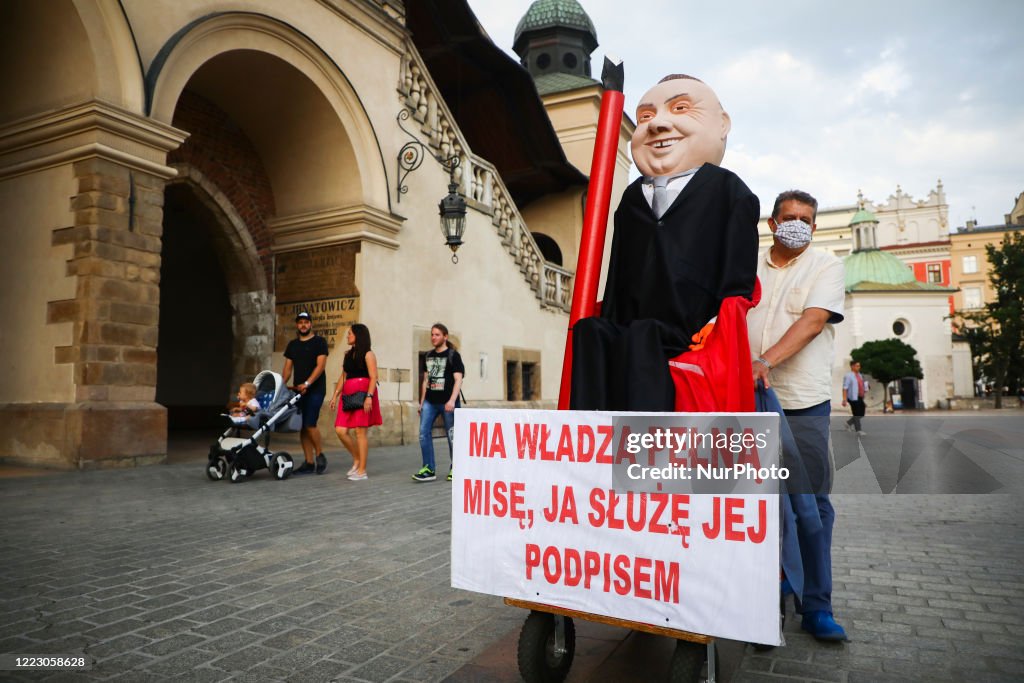
Ahead of the next presidential election in 2014, Jarosław Kaczyński announced that Duda would be the Law and Justice candidate. He also backed him for re-election, saying that Duda was the “dream candidate and guardian of the Constitution.” Although the Polish president has powers in a range of areas, including monetary policy through the appointment of the central bank’s leadership, political opponents often referred to him as a “ballpoint pen,” implying that he merely signed whatever the party put in front of him.
However, in 2017, the first serious disagreement with Kaczyński emerged, precisely because Duda refused to sign two of three controversial judicial laws proposed by Law and Justice – exercising the president’s power of veto. He did so following mass civic protests, criticism from legal professionals, and pressure and threats of sanctions from the European Union and the United States. Nevertheless, after lengthy negotiations, public criticism from Kaczyński, who called the move a “serious mistake,” and revisions to the proposed legislation, President Duda signed the laws in 2020, even though the European Commission still considered them highly controversial.
Former Polish President Aleksander Kwaśniewski, during whose presidency Poland joined the EU and NATO and who is remembered as a democrat, said of Duda that “he is not actually an extremist, but he has to implement the party’s policies because of his lack of independence.”
At the end of his two terms as president, Duda himself described his relationship with Kaczyński as strained and difficult, stressing that Kaczyński does not tolerate disagreement and expects orders to be carried out. He also said that “the Polish right needs a more modern approach, without the ‘complexes’ inherited from the communist era,” and questioned whether people approaching the age of 80 should be deciding the country’s future, an apparent reference to Law and Justice leader Jarosław Kaczyński. He plans to remain active in Poland’s public and political life.
Andrzej Duda became a suitable presidential candidate at a time when he had already built a career as both a lawyer and a politician, but had not yet achieved widespread popularity. One might say that Kaczyński recognised the right person at the right moment. His political and social capital made him more resilient to demands for complete loyalty and ensured that he remained a political figure in his own right even after two terms as president within the Law and Justice camp, which is now, in 2026, losing ground and going through serious internal party conflicts.
Hungary
The choice of president in Hungary is far less uncertain, since the president is elected not by a fickle electorate but by parliament with a two-thirds majority – something that posed no problem for Viktor Orbán’s Fidesz party. Nevertheless, it is interesting that even this restricted selection process can produce the wrong choice, as the case of Katalin Novák demonstrates.
During his 16 years in power, Orbán “transformed Hungary through a series of changes to its laws and Constitution, winning four consecutive elections – all four decisively, with a two-thirds majority of seats in parliament. In an effort to secure Orbán’s political legacy, more than 40 laws were adopted, reshaping state institutions, the economy, electoral laws and the media.” Precisely for this reason, it was important to have a loyal ally in the presidency, the office responsible for signing legislation. János Áder, a co-founder of the party and a Member of the European Parliament, fulfilled that role for two terms, a full ten years.
After Áder’s second term expired, Katalin Novák, Orban’s family affairs minister was elected as president – the first woman to hold the office. As minister, she had repeatedly been criticised for ignoring problems including the gender pay gap, the lack of state support for childcare and eldercare, the double burden of paid employment and unpaid domestic work, and domestic violence.
When it emerged in 2024 that among those granted a presidential pardon, one of the president’s few powers was the deputy director of a children’s home who had been convicted of covering up sexual abuse, Novák resigned live on television. The then justice minister, Judit Varga, the former wife of current Hungarian Prime Minister Péter Magyar, was also held responsible for the “political scandal,” as it was described publicly. The episode was instrumental in the emergence of the new Tisza Party, which won power in 2026, as we have written about previously.
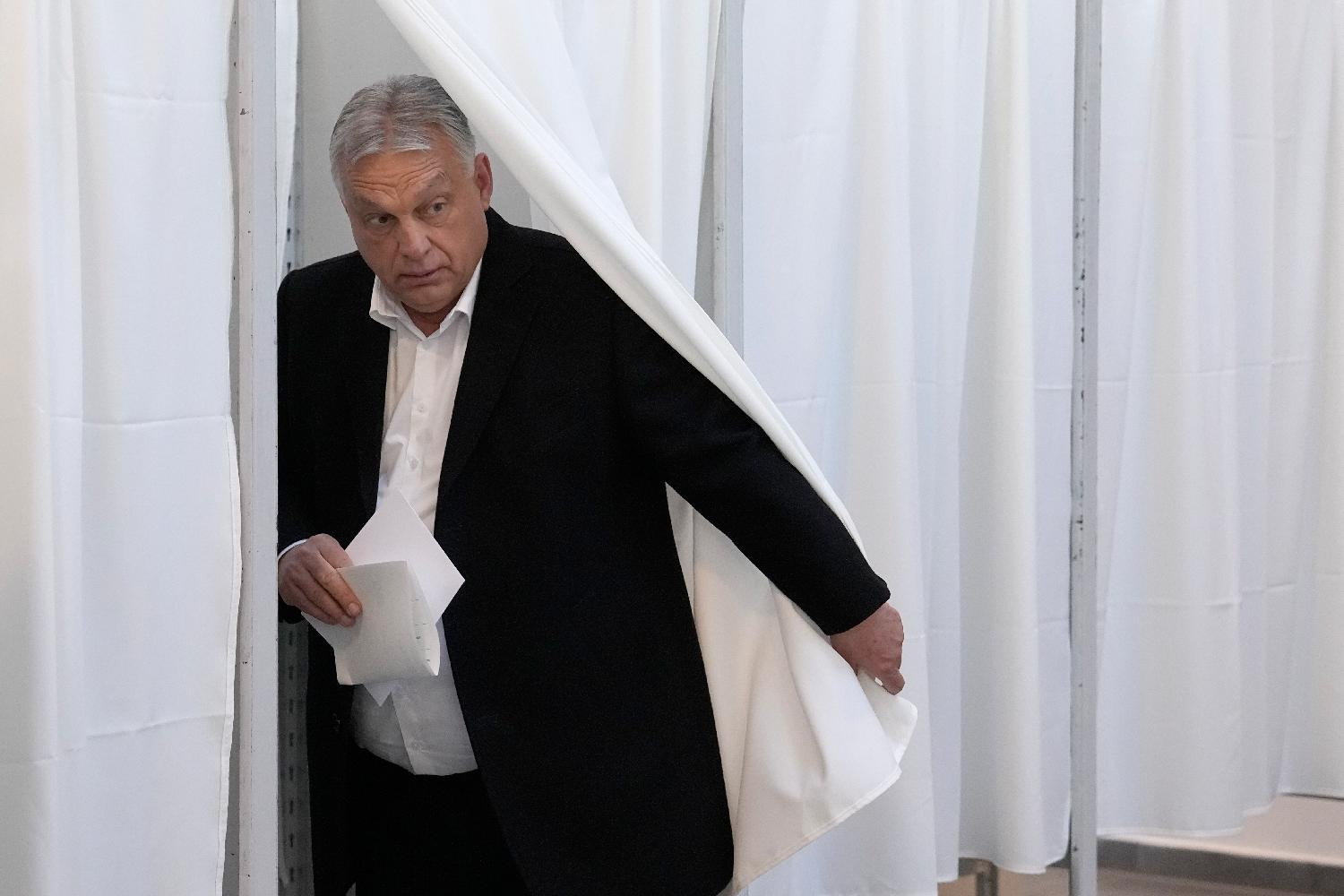
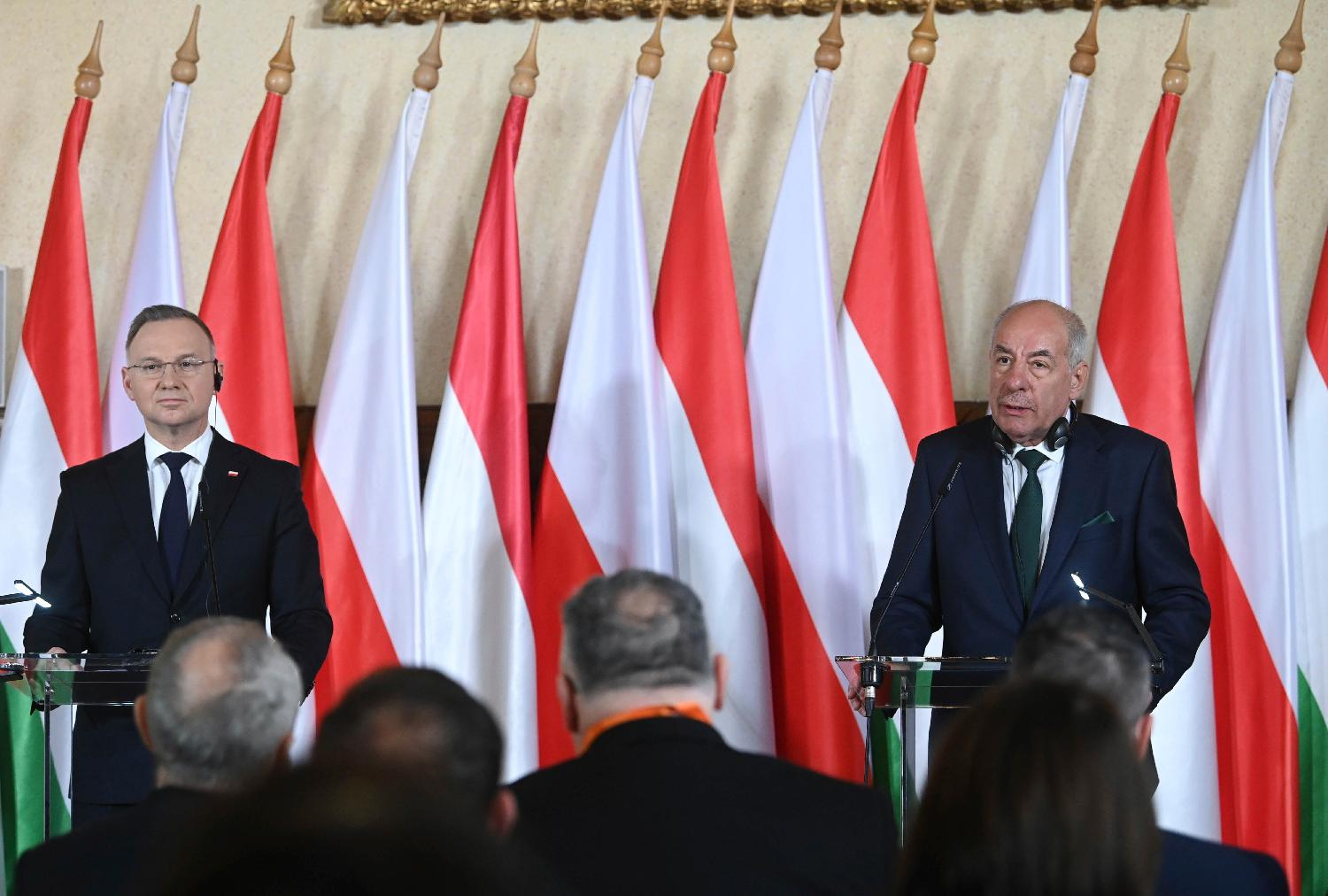
Following the resignations, Orbán’s Fidesz party, in an attempt to limit the political damage, submitted a constitutional amendment banning future pardons from benefiting in any way people convicted of crimes against children. Tamás Sulyok, the president of the Constitutional Court, was elected to replace Katalin Novák. He will be remembered for signing, after Tisza and Péter Magyar’s victory, a constitutional amendment shortening his term of office, and subsequently stepping down as president.
The Hungarian example shows that loyalty alone is not enough, and that a signature is never merely a stroke of a ballpoint pen. Because just as credit goes to the person who actually makes political decisions when those decisions are right, responsibility also falls on that person when they are wrong.
This English translation was generated with the assistance of AI and reviewed for accuracy.